Saint Kinga
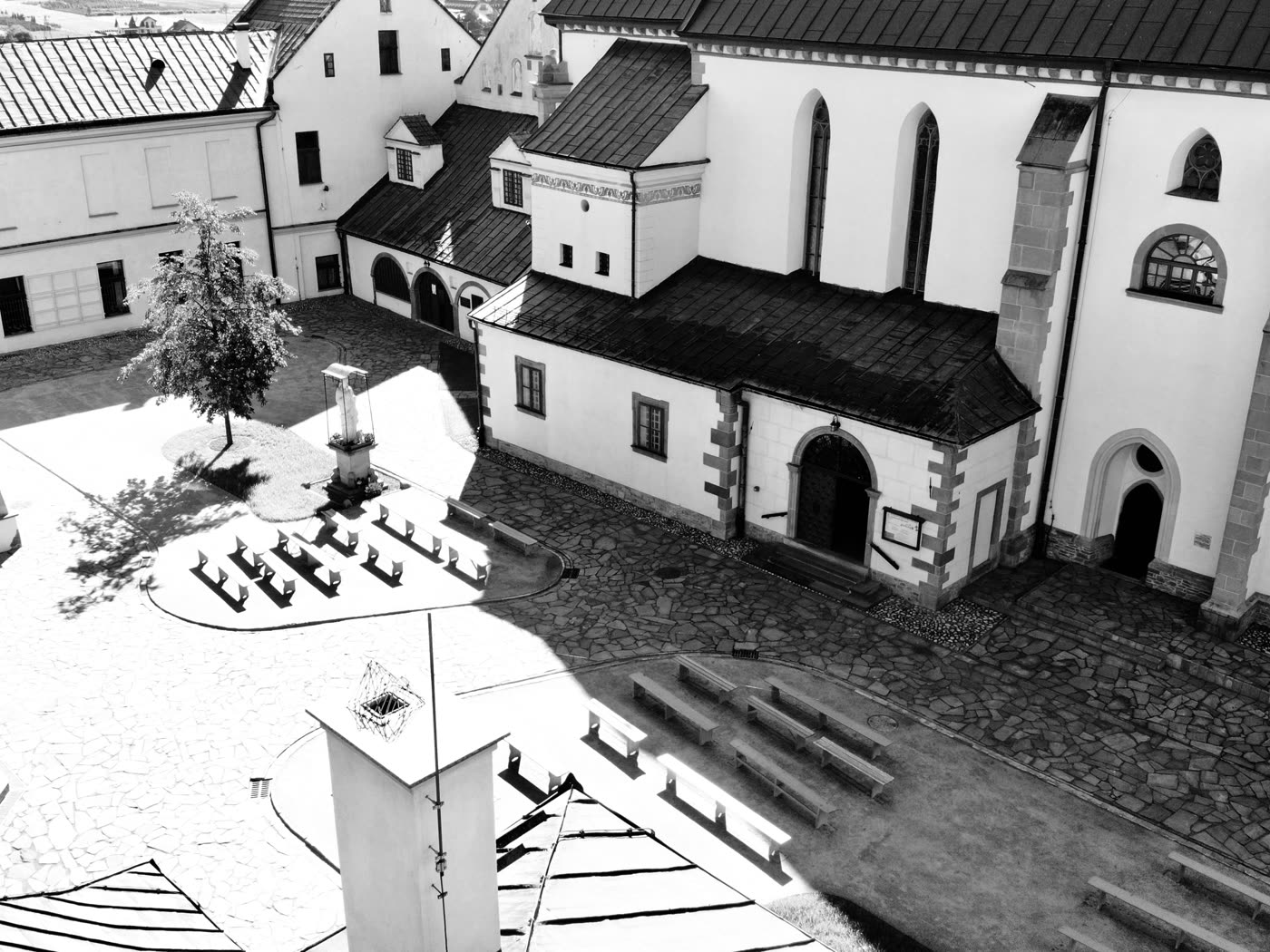
Seven hundred years ago, on 24 July 1292, Kinga died in the Poor Clare monastery in Stary Sącz: a Hungarian princess, Duchess of Kraków and Sandomierz, widow of Bolesław the Chaste, Lady of Sącz, founder of the Stary Sącz monastery and, at the end of her life, a Poor Clare. Her remarkable personality had an enormous influence on the affairs of Lesser Poland in the second half of the 13th century. After receiving the Sącz land as her own property, she took up its administration. She took particular care of Stary Sącz, contributing to its economic revival. Kinga’s main work in the town was the foundation of the monastery. Although at the end of the 13th century Stary Sącz lost its political and economic importance to Nowy Sącz, founded by Wenceslas of Bohemia, as the place of Kinga’s tomb and keeper of her memorabilia it gained fame and religious importance for centuries to come as the main centre of her cult. Kinga played a great role not only in the religious history of Poland but also in its politics and culture. Numerous works of architecture and art are connected with her, as well as a wealth of Polish oral folklore. Because of the phenomenon of Kinga, from the very beginning her figure attracted not only chroniclers but also theologians, ethnographers and regional historians.
Kinga was born on 5 March 1234, the third daughter of Béla IV, King of Hungary of the Árpád dynasty, and Maria, daughter of the Byzantine Emperor Theodore I Laskaris. She was born in one of her father’s residences, probably in Esztergom.
We know little about Kinga’s earliest childhood, apart from the fact that her devout parents saw to it that the child received a deeply religious upbringing. Tradition says that already in this earliest period of her life Kinga loved to pray and had a tender heart.
The Árpád family was known for its Christian traditions and produced such figures as St. Stephen, his son St. Emeric, St. Ladislaus, St. Elizabeth, Béla IV’s own sister, and finally three of his six daughters, raised to the altars by the Church: Kinga, Margaret and Yolanda. To them we should also add Constance, Kinga’s younger sister, who died with a reputation for holiness. Yet the highest flights of religious spirit in this royal family often clashed with a ruthless struggle for the throne and the moral laxity of some of its members.
While Kinga was spending her early childhood in Hungary, Piast Poland, divided into many duchies, was still threatened by fighting among the Piast princes. The ambitions of the rival princes were directed towards Kraków, whose possession meant power over the other duchies. Under the Congress of Łęczyca, Kraków was to belong to Bolesław, son of Leszek the White and Grzymisława. Bolesław, still a child, could not claim his property by force of arms. Ruling the Duchy of Sandomierz at that time was very difficult for him and was possible only thanks to the care and protection of Henry the Bearded. After Henry’s death, Grzymisława, Bolesław’s mother, decided to find a new protector in order to strengthen his position in Sandomierz. This is how the idea arose of winning for him the hand of the five-year-old daughter of the Hungarian king. Carrying out this plan was not easy because of Bolesław’s position as a minor Duke of Sandomierz with claims to the throne of Kraków. In the eyes of Béla and his wife, such a marriage was beneath their royal dignity. It was probably only the political situation and the threat of Tatar invasions that led King Béla IV to consent to the marriage.
In 1239 Kinga came to Poland to marry the twelve-year-old Bolesław, son of Leszek the White. The meeting of the young betrothed couple and Kinga’s solemn welcome took place in Wojnicz. It was most probably here that a preliminary marriage agreement was concluded. According to the canon law of the time, the actual marriage could take place only after Kinga reached the age of twelve, that is, after 1246.
After the meeting in Wojnicz, Kinga travelled on to Sandomierz with her betrothed and his mother Grzymisława, in whose care she remained during the following years of her stay in Poland.
Kinga’s stay in Sandomierz was interrupted by the Tatar invasion of 1241. Then began her wandering, which she shared with Bolesław and her guardians. At first they decided to stay in Kraków, but after the defeat of the Polish knights at Chmielnik they headed towards Hungary to find a safer place there under the protection of Béla IV.
The Tatar onslaught was so great that it also reached the Hungarian kingdom. After the lost battle on the river Sajó on 11 April 1241, the whole of Hungary was covered with ruins. At that time Coloman, Salomea’s husband, was killed, and King Béla sought safety in flight. Jan Długosz mentions the stay of Bolesław and Kinga in the castle in the Pieniny Mountains on the Dunajec and their further flight to Moravia, where the ducal court is said to have found hospitality in the Cistercian monastery at Velehrad.
Kinga and Bolesław were able to return to Poland only after the death of the Great Khan Ögedei on 11 December 1241, when the Tatar armies withdrew from the occupied lands. The second direct reason for their return was the end of the fighting among the Piast princes for the throne of Kraków, left empty after the death of Henry the Pious on 9 April 1241. According to biographical records, they returned in April 1243.
The devastated and plundered country needed rebuilding. Money was needed to pay the soldiers fighting on Bolesław’s side. In this difficult situation Duchess Kinga lent Bolesław goods from her dowry to save the duchy. In the following years, too, Kinga supported her husband several times, and in gratitude in 1257 he granted her the Sącz land, confirming this with a legal act.
The castles in both Kraków and Sandomierz turned out to be destroyed, so the residence of the ducal court was moved to Nowy Korczyn. According to tradition, the years spent there were a particularly difficult time in Kinga’s life. It was a time of difficult struggle to preserve her virginity in her marriage to Bolesław. The marriage was solemnly concluded in 1246. Referring to the wedding, her biographers stress that during the wedding feast Kinga withdrew from the noise of the celebration and, entrusting her future to Christ, asked Him for the grace of preserving her virginity in marriage. Her later firm attitude led Bolesław to agree to a virginal marriage. A vow of chastity taken by women at ducal courts was nothing new in the society of the time, but Kinga’s example particularly highlights her perseverance in her resolution.
During her marriage to Bolesław, Kinga lived through the second Tatar invasion of 1259 to 1260. This time, together with those closest to her, she found refuge with Leszek the Black at the castle in Sieradz.
In his work Jan Długosz mentions the visit Kinga paid to her parents in Hungary. Drawing on Hungarian chronicles, he reports that during this stay the Blessed saved her father’s life. As a votive offering of thanksgiving for his rescue, Béla IV founded a church and a monastery for the Franciscans in Esztergom, and gave his daughter one of the salt mines in Máramarossziget as her own property. According to legend, Kinga miraculously brought Hungarian salt to Poland along underground routes. On receiving the salt mine, before returning to Poland she is said to have thrown her ring down the shaft. According to legend, the miners found this ring in the first lump of salt extracted from the shaft they dug at her command in Bochnia. Unlike the legendary version, it is more likely that Kinga brought miners to Poland who discovered salt in Bochnia and began to extract it.
The following years of Kinga’s life were spent caring for the subjects of two duchies, Kraków and Sandomierz. She also took part in political and economic life. All the documents from this period bear, besides Bolesław’s seal, also Kinga’s seal, or Bolesław, when issuing privileges, noted that he did so with his wife’s consent. These facts show that Kinga played a great role in political and economic life and was a co-ruler, not merely the duke’s wife. She served the poorest, cared for expectant mothers and arranged funerals for the poor at her own expense. Besides caring for the poorest, Kinga made efforts to build new churches or to support existing ones.
From this period of Kinga’s life, too, her biographers record that she accepted the rule of the Third Order of St. Francis. This seems credible, as the Franciscan ideal was particularly popular at ducal courts at the time. Kinga discovered the message of the Poor Man of Assisi most accurately and planted it in Polish soil. Prepared for great tasks by careful intellectual and spiritual formation, the model of her life and holiness is an interesting example of the reception of Franciscan ideals.
With a spirit of strict penance she was able to combine Franciscan perfect joy: joy in curses and slander, joy in physical suffering. Presented as a duchess and at the same time a person filled with the spirit of Franciscan poverty, she seems to reflect the image of a saint that took shape in the society of medieval Poland. Looking at the spirituality of the Blessed, its particular richness and character, it is not hard to notice one of her great virtues: mercy towards the poor and those in need. Her endless generous alms for churches, clergy and especially the Friars Minor, and for crowds of the poor, bear eloquent witness to her merciful love. Every person in need became close to Kinga. She took special care of widows and orphans. She devoted much time to the sick, whom she visited, looked after and nursed. Nothing of the treasures she possessed did she use for her own needs. She renounced wealth, privileges, ducal dignity and all earthly happiness, everything for God and her neighbour: this was the motto of her life, to which she remained faithful to the end.
Together with Bolesław she became the founder of many monasteries and churches. Besides the new churches founded in Nowy Korczyn, Bochnia and probably also in Jazowsko, Rajbrot and Łącko, and besides the role she played in the efforts of the Kraków clergy for the canonisation of St. Stanislaus, the lasting trace of Kinga’s activity is above all the main work of her life: the foundation of the Poor Clare monastery in Stary Sącz. The first mention of the idea of founding a convent of Poor Clares in Stary Sącz is dated 10 March 1257. Only after the death of her husband Bolesław on 7 December 1279, however, could Kinga devote herself entirely to the work she had begun.
The foundation of this monastery was preceded by a dispute between Kinga and Leszek the Black, Bolesław’s heir, who was evidently opposed to these plans. In the end, however, Kinga issued the foundation charter of the Stary Sącz convent on 6 July 1280. In it she writes: “We, Kunegunda, widow of the late Lord Bolesław, formerly Duke of Kraków, Lady and Duchess of Sącz, pondering deeply in our heart and with sincere piety that nothing will so avail at the Last Judgement and nothing so appeases the Just Judge, who gives life to the righteous and death to the wicked, as works of mercy, which by themselves lead those who show mercy to the doors of blessed eternity, have resolved, to the glory of God, in honour of the holy Mother of God Mary and of blessed Francis /.../ to endow and build a monastery for the nuns of St. Clare /.../, so that, having renounced their own will, they may serve the Lord in fear day and night and walk before Him in holiness and truth, choosing entry into life by the narrow path and the strait gate; wherefore it is right that they should be supported in all the needs of temporal life, so that the more peacefully they live, the more fervently they may serve the Lord and be of use to themselves by the merit of their life, and to others by the help of their prayers and their example...”
After Bolesław’s death she gave the rest of her valuables to the poor and went to Stary Sącz, where she decided to spend the rest of her life, taking the religious habit. For several years she kept her court and chancery officials with her, which shows that she did not become a nun at once, being occupied with the administration of the duchy granted to the monastery. Only in 1288 does a document appear signed by Kinga in which she describes herself as bound to the service of God in the Order of St. Francis.
Nothing suggests that Kinga held any important offices or dignities in the monastery, yet she occupied a special position. Her virtues, humility, docility, submission to all the requirements of monastic life, energy and strong will, and contemplative prayer, influenced everyone around her. She treated her sisters not as a duchess and founder but as their mother.
Together with the sisters she lived through one more Tatar invasion, lasting from December 1287 to January of the following year. In connection with this invasion and the flight of Kinga and her fellow sisters to the castle in the Pieniny Mountains, a whole series of legends spread over time among the people of the Sącz region. These legends, created by the people, tell of the goodness and holiness of the duchess and nun who loved her people.
After returning from the flight, Kinga again became the hand of Providence, saving from hunger both the nuns and the rest of the people of the Sącz region. The memory of this charitable work of the Lady of the Sącz Land survived among the inhabitants of the region for centuries.
Soon after its completion, the Stary Sącz foundation became an important cultural and religious centre for southern Poland. The convent was a place of religious life for women from royal families as well as for sisters from the common people. Through its universality it had a great influence on the whole of Lesser Poland.
In the oldest hagiographies we find information about Kinga’s care for the development of Polish culture through promoting the Polish language in psalms and hymns. Tradition attributes to her the introduction of Polish sermons and prayers into the Liturgy of the Hours of the first generation of Stary Sącz Poor Clares. Besides her efforts for the Polish language, Kinga also promoted the development of church singing. She also made a great contribution to our culture in the field of education. Lay girls were admitted to the monastery, and the sisters taught them to read and write. Thanks to her, parish schools were founded.
In September 1291 Kinga fell seriously ill. Ten months later, on 24 July 1292, she died with a reputation for holiness in the Stary Sącz monastery. The funeral ceremonies were held in Stary Sącz with the splendour due to Kinga. She was buried in the Poor Clares’ monastery church, in a separate chapel.